
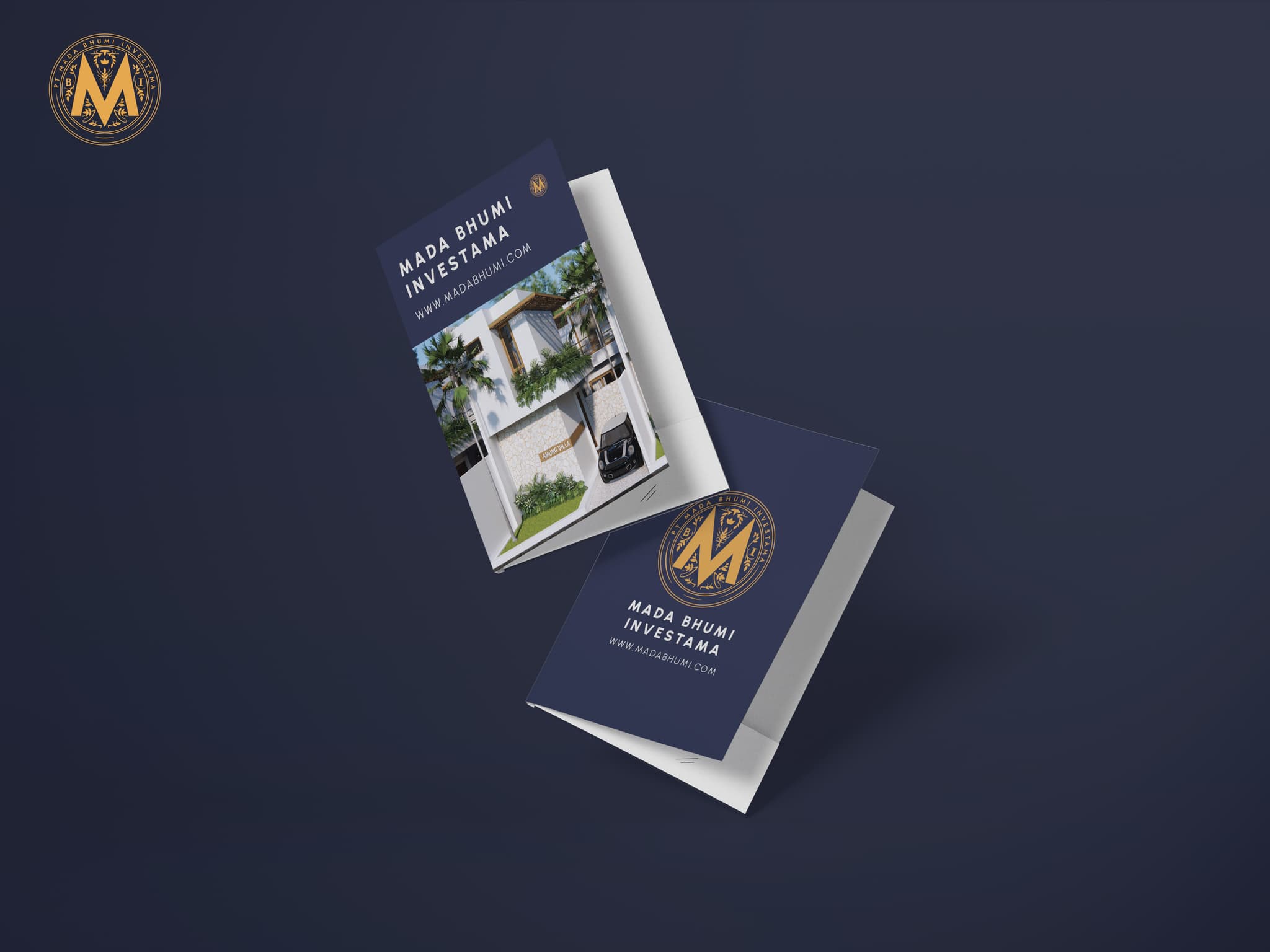
When designing a portfolio, especially one that includes brand design like the one shown here for Mada Bhumi Investama, it's important to highlight the elements that define the brand and show how you've incorporated these into your work.
Key Elements in This Design
Logo Design: The logo is central to the brand identity. In this case, Mada Bhumi Investama's logo is simple yet strong, featuring a bold "M" and elegant decorative elements. The logo can be used as a key visual in your portfolio, showcasing how you maintained brand integrity while adapting it to different mediums and materials.
Color Palette: The deep blue and gold color scheme plays a crucial role in establishing a professional and elegant look. These colors can be repeated across your portfolio to maintain a cohesive design theme. Consider using these colors in headers, dividers, and accent areas to keep the branding consistent.
Typography: The font choices seen here are classic and professional, enhancing the clean and modern feel of the design. Your portfolio should reflect similar attention to typography—choose clean, readable fonts that complement the brand’s feel and help convey your own design sensibilities.
Composition and Layout: The placement of the logo and text in this design is balanced and visually appealing. When creating your portfolio, be sure to showcase how you approach layout. Think about how to place your projects in a way that guides the viewer’s eye, using symmetry and negative space effectively.
Brand Elements: Notice the subtle inclusion of traditional batik patterns in the design. As a designer, incorporating local culture or thematic elements into your projects can show your creativity and ability to tailor designs to specific contexts, whether that’s for luxury or cultural relevance.
How to Present This in a Portfolio
Project Section
- Case Study: Present this branding as a case study in your portfolio. Include details about the brief, concept development, and how the final design aligns with the brand's values of trust, professionalism, and cultural relevance.
- Before and After: If applicable, show any iterations or different design directions you explored before arriving at this polished version.
Consistency
- Throughout your portfolio, highlight how the branding extends to various materials such as business cards, letterheads, and other print collateral (as seen in the image). This demonstrates your ability to work with a brand across multiple touchpoints.
Visual Appeal
- Mockups: Incorporate high-quality mockups (like the one used in this design) in your portfolio to show how your design works in real-world settings. This can be a great way to demonstrate your versatility and how you visualize the brand’s presence in physical or digital environments.
Conclusion
As a designer, your portfolio should not only showcase your work but also tell the story of how you shape a brand’s identity from concept to execution. In this case, the use of clean lines, elegant color schemes, and traditional design elements reflects your attention to detail and ability to craft memorable, culturally relevant brands.


.jpg&w=828&q=75)